Drawing inspiration from her background as a first-generation college graduate from Jamaica, Dr. Andrea McDonald is an advocate for respect.
Dr. McDonald remembers how the words of a student helped her make the choice to dedicate her life to public health education: ”Professor, thank you for helping me understand that carbohydrates are not fats.”
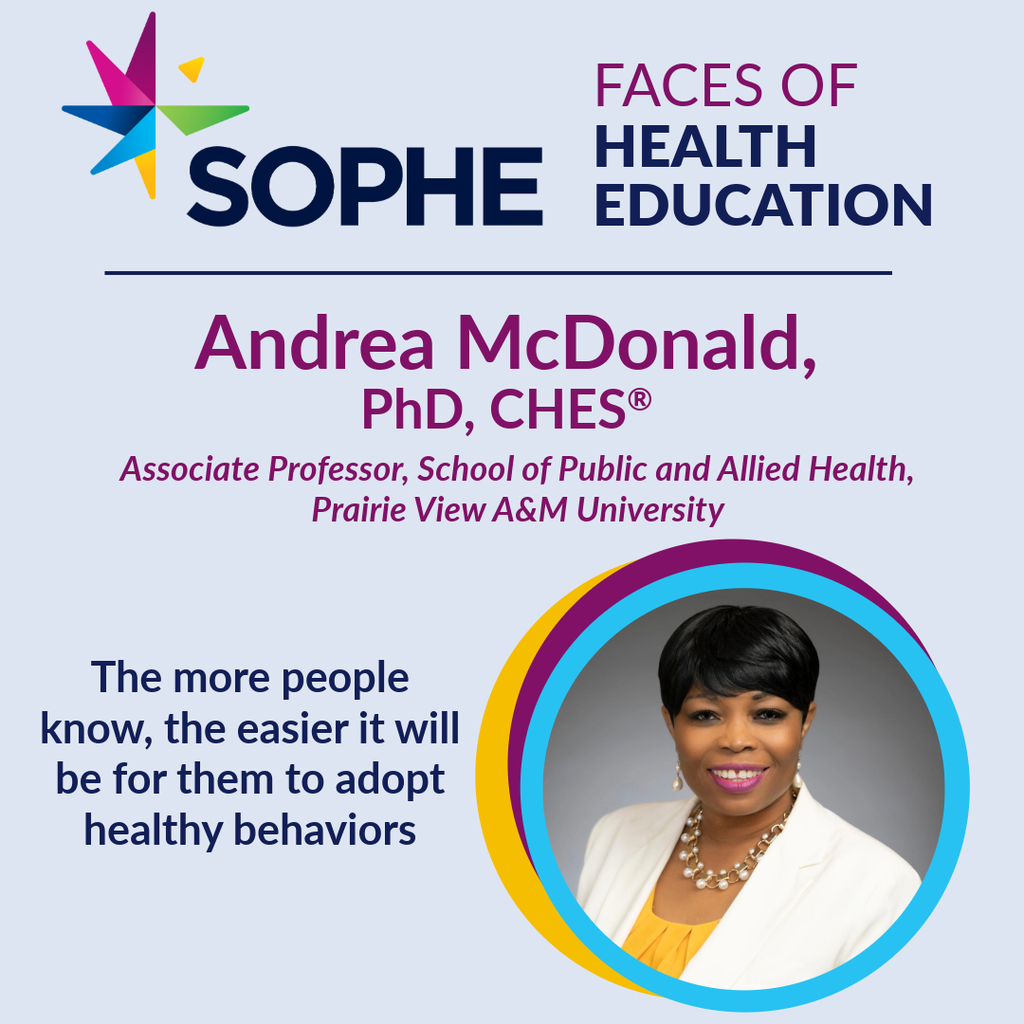
Her dissertation on food preparation literacy was a product of her desire to help people make informed decisions, regardless of their education. The more people know, the easier it will be for them to adopt healthy behaviors, but it doesn’t end there. If people are guided and treated with dignity, they are even more likely to act for their health.
Focusing on nutrition and dietetics in her undergraduate years, Dr. McDonald later received her Master’s degree in human sciences from Prairie A&M University and finally a Ph.D. in health education from Texas A&M University. She then went into teaching, research, and community health planning, leading the development of the Master of Science in Public Health program, creating online courses, mentoring students in research, and serving as chair of the school curriculum. As an associate professor, Dr. McDonald has led research initiatives like the GET PHIT program, which helps people from underrepresented backgrounds in their public health education careers.
Dr. McDonald’s time as a SOPHE member has been fruitful, developing professional relationships, and teaching and learning from her colleagues. She is currently chair of the Continuing Education Committee at SOPHE, where she collaborates with others on how to support professional learning experiences.
To understand the issues of a population, the key is to listen. Dr. McDonald urges future public health educators to be conscious of people’s lived experiences.
“Stay curious and listen before you assume you know what a community needs. Build a strong foundation in health education, research, and program planning, but also seek opportunities to work directly with communities. Find mentors, join professional organizations such as SOPHE, and be open to learning from people in other disciplines. Most of all, remember that the people affected by a health issue should have a voice in the solutions.”
________________________________________
This blog post was written by Rea Yoh, a public health graduate student at Dartmouth College.