
Mental Health Awareness
May is Mental Health Awareness Month. Since its inception in 1949, Mental Health Awareness Month has been a cornerstone of addressing the challenges faced by millions of Americans living with mental health conditions. SOPHE is proud to support this cause and provide these resources.
Exploring Awareness: An Overview of PTSD
SOPHE strives to raise awareness of mental health conditions, especially those that are under-represented and under-researched. One such condition SOPHE highlights is PTSD.
Post-traumatic stress disorder (PTSD) is a psychiatric condition that can develop in individuals who have experienced or witnessed a traumatic event, such as combat, sexual assault, natural disaster, or serious accident. According to the American Psychiatric Association, PTSD affects approximately 3.5% of U.S. adults each year and is characterized by four core symptom clusters: intrusion (e.g., flashbacks, nightmares), avoidance of trauma-related reminders, negative alterations in cognition and mood, and heightened arousal and reactivity such as sleep disturbance and irritability.
Additionally, resilience-based interventions such as mindfulness-based stress reduction, stress inoculation training, and meaning-making therapies are being developed for both at-risk populations and those already living with PTSD. Taken together, these advances point toward a future in which PTSD treatment is not only reactive but increasingly preventive, targeting resilience pathways before and immediately after trauma exposure.
For more information on PTSD, visit here.

On-Demand Webinars
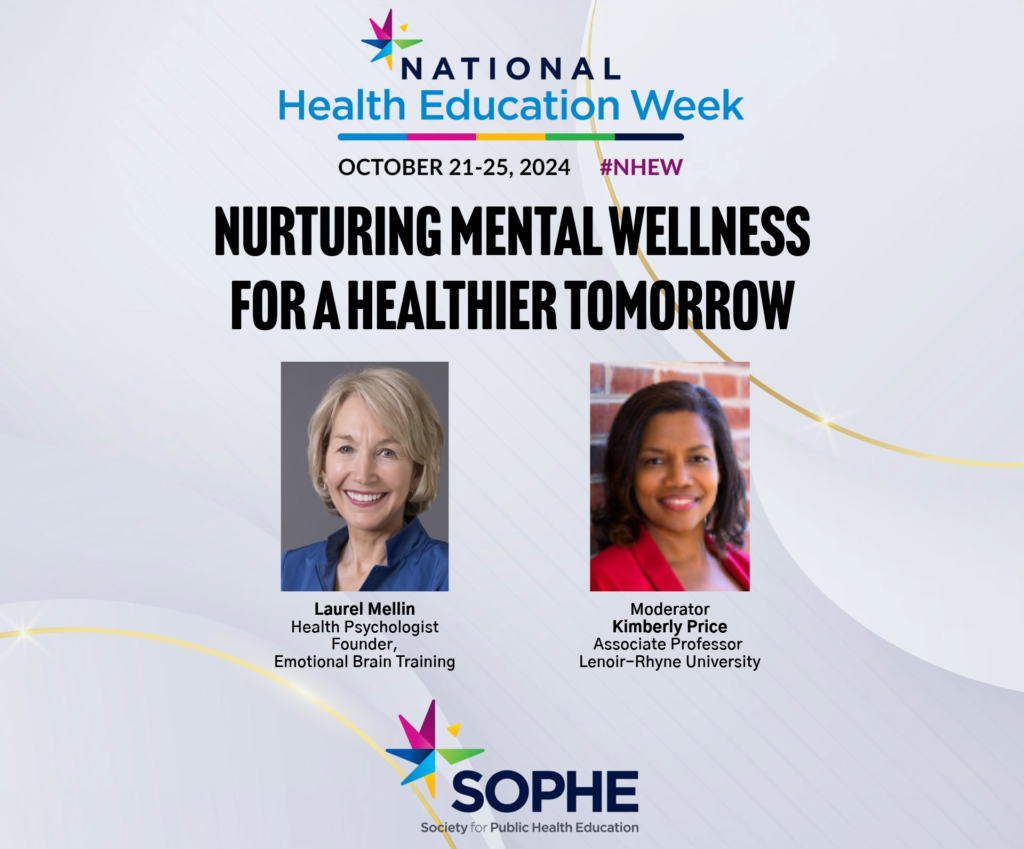
Stress overload is a root cause of mental health problems and chronic diseases, yet research has shown that cognitive methods fall short of switching off the stress response. In this presentation, emotional brain training founder and health psychologist Laurel Mellin, PhD, describes how processing emotions based on physiologic brain states can directly and rapidly switch off the stress response with technology that can be applied in public health programs.

Mental health is a prevalent and persistent problem among the United States’ adolescents. Between 2009 and 2019, 40% more adolescents have experienced persistent feelings of sadness and hopelessness. Since COVID-19 and the isolation that came with it, this is even greater. This FREE webinar addresses rising mental health challenges. Samantha Bertomen and Lisa Peters, CHFP introduce an educational and multi-faceted approach to create a better world for our youth, where mental health is no longer stigmatized, youth have access to the resources they need, and their health outcomes are improved.
Journal Self-Study
From our Journals

A Systematic Review of the Impacts of Media
Mental Health Awareness Campaigns on Young People
Mental health issues are prevalent among young people. An estimated 10% of children and adolescents worldwide experience a mental disorder, yet most do not seek or receive care. This study addresses the knowledge gap by reviewing the existing literature on the impact of media mental health awareness campaigns on young people.
Health Education & Behavior
- A Multilevel Prevention Program for Depressive and Anxious Symptoms: Factors That Influence Decisions to Participate and Efficacy
- Impact of Physical Activity on Smoking, Sleep Disorders, and Depression Among U.S. Adults
- Depression, Anxiety, and Stress Among Emerging Adult Undergraduates: A Longitudinal and Two-Cohort Study
Health Promotion Practice
- Encouraging “Positive Views” of Mental Illness in High Schools: An Evaluation of Bring Change 2 Mind Youth Engagement Clubs
- A Systematic Review of the Impacts of Media Mental Health Awareness Campaigns on Young People
- Schools as a Source of Mental Health Literacy: Adjusting and Validating a Mental Health Literacy Scale
- The Paradoxical Relationship Between Health Promotion and the Social Media Industry
- Photovoice as a Method to Reduce the Stigma of Mental Illness Among Health Care Students
Pedagogy in Health Promotion
- Advancing Pedagogies to Promote Mental Health and Interprofessional Education
- Understanding the Connection Between Student Wellbeing and Teaching and Learning at a Canadian Research University: A Qualitative Student Perspective
From our Archives
Related Resources
Mental Health & Mindfulness ToolkitMindfulness is the basic human ability to be fully present, aware of where we are and what we’re doing, and not overly reactive or overwhelmed by what’s going on around…