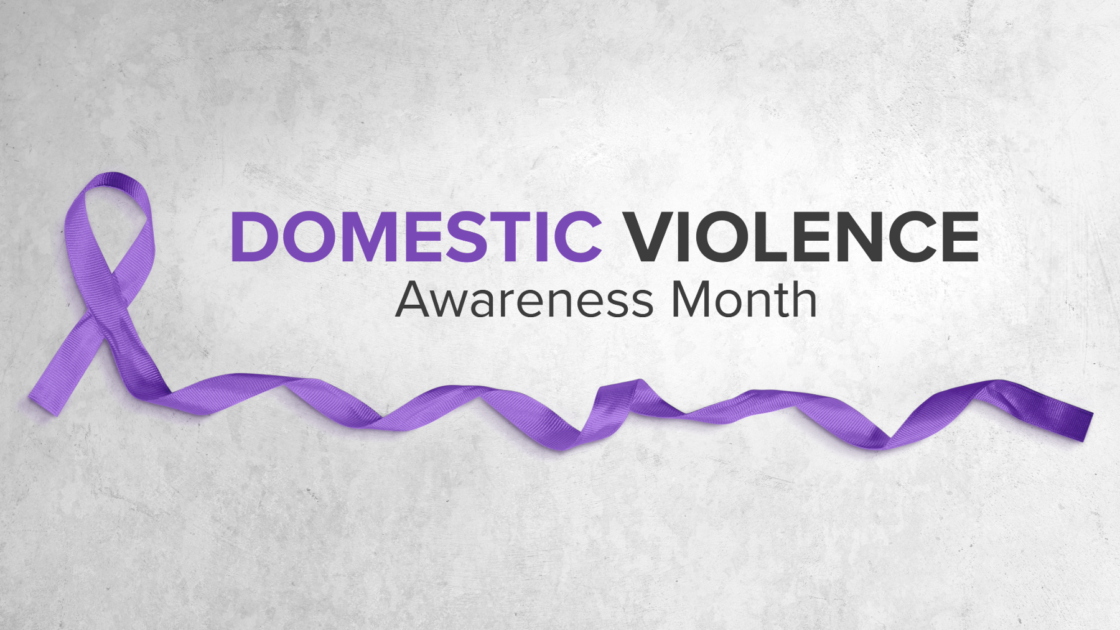

October is Domestic Violence Awareness Month. The purple ribbon has become a symbol of domestic violence awareness, representing the importance of standing with survivors and working towards safer and healthier relationships within communities.
In broad terms, domestic violence occurs when one person utilizes a pattern of behavior to exert control or maintain influence over another individual within the household or relationship. Further explained by Huecker et al. (2023), domestic and family violence is multidimensional and can include economic, physical, sexual, emotional, and psychological abuse affecting children, adults, and older individuals. Intimate partner violence (IPV) is the most widespread and common form of domestic violence, specifically involving current or former romantic partners and can include physical, sexual, emotional, psychological, and financial abuse. Child abuse involves the abuse or mistreatment of an individual under the age of 18. Although these forms of abuse are distinct, they can overlap within families and households, creating circumstances that intertwine multiple individuals.
Intimate partner violence is far more prevalent than many people realize, affecting millions of individuals across the United States every year. According to the Centers for Disease Control and Prevention, more than one in three women (approximately 43.5 million), and more than one in six men (approximately 20.7 million), will experience contact sexual violence, physical violence, stalking, or some combination of these behaviors by an intimate partner during their lifetimes.
The prevalence varies depending on the type of abuse experienced. Among women, nearly one in four have experienced physical violence, approximately one in five have experienced contact sexual violence, and about one in eight have experienced stalking by an intimate partner. Among men, approximately one in seven have experienced physical violence, while contact sexual violence and stalking also affect a substantial number of individuals.
These statistics represent more than isolated incidents, as the effects of abuse can continue long after the violence itself has occurred. Nearly one in three women and about one in eight men who have experienced intimate partner violence report at least one related impact, including physical injuries, missed work or school, fear for their safety, the need for medical care, or involvement with law enforcement. Additionally, domestic violence is widely recognized as an underreported issue because survivors may fear retaliation, feel ashamed, depend financially on their abusers, or worry that others will not believe them. As a result, reported statistics likely do not fully capture the extent of the problem.
Recognizing domestic violence requires understanding that abuse is rarely limited to one behavior. The National Domestic Violence Hotline describes abuse as a pattern of behaviors used to establish or maintain power and control over a partner. Physical abuse is often the most recognizable form because it involves acts of violence or threats of physical harm. However, other forms of abuse can be less visible while still causing significant harm. Emotional and psychological abuse may involve humiliation, intimidation, manipulation, threats, or isolation from friends and family. Sexual abuse occurs when someone engages in sexual activity without consent or uses force, threats, or coercion to control another person’s sexual choices. Financial abuse can involve restricting access to money, interfering with employment, or preventing a partner from becoming financially independent. Reproductive coercion occurs when an individual attempts to control another person’s reproductive decisions through pressure, threats, or interference with contraception.
Abuse can also extend into digital spaces through online harassment, surveillance, the nonconsensual sharing of intimate images, and sextortion. Stalking, which involves repeated unwanted attention, following, monitoring, or harassment that causes fear or concern for safety, can occur during or after a relationship. Spiritual abuse may involve using religious beliefs, practices, or authority to shame, manipulate, or control another person. These behaviors can occur together, making it difficult for survivors to identify what is happening or seek help. Learning to recognize the different forms of abuse can help individuals identify unhealthy or dangerous relationship patterns and respond with greater understanding and compassion.
Domestic violence can also have serious consequences for children, even when they are not the immediate targets of abuse. Children who witness violence between caregivers may experience fear, instability, and stress that affect their emotional, social, and physical development. According to a 2025 review published in Pediatric Clinics of North America, approximately one in four children will be exposed to intimate partner violence between caregivers at some point in their lives, and children are present in an estimated 50% to 75% of domestic violence incidents reported to police. Exposure to violence can increase a child’s risk of experiencing abuse themselves and is associated with a greater likelihood of anxiety, depression, aggression, attention difficulties, developmental delays, and challenges at school.
Research has also linked childhood exposure to intimate partner violence with longer-term health and behavioral consequences that may continue even after the child is no longer exposed to an unsafe environment. However, not every child who witnesses domestic violence will develop lasting difficulties. Supportive relationships with trusted adults, access to appropriate services, and stable, safe environments can help reduce the harmful effects of exposure. This makes early identification and individualized support especially important. Protecting children affected by domestic violence requires recognizing their experiences, responding to their emotional needs, and ensuring that both children and their non-abusive caregivers can access the resources necessary to recover.
Domestic Violence Awareness Month serves as a reminder that preventing abuse and supporting survivors are responsibilities shared by individuals, communities, and institutions alike. Friends, family members, educators, healthcare professionals, and community organizations can all contribute by learning to recognize warning signs, listening to people’s experiences without judgment, respecting survivors’ decisions, and helping connect individuals with appropriate resources. It is important to remember that leaving an abusive relationship can be complicated and potentially dangerous, so survivors should be supported rather than pressured to make decisions before they are ready. Access to confidential assistance, safe housing, counseling, and legal resources can make a meaningful difference for individuals experiencing abuse. The National Domestic Violence Hotline provides support at 800-799-SAFE (7233), and individuals can text START to 88788 to connect with an advocate.
________________________________________
This blog post was written by Andrew Bjork, a student at William & Mary in Williamsburg, VA.