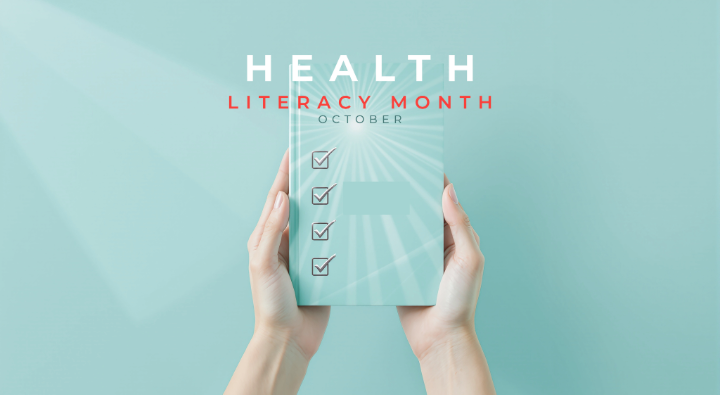
When was the last time you tried to make sense of an insurance statement, or figured out which specialist your doctor meant by “a referral”? If it felt harder than it should have, you’re not alone, and it’s not a personal failing. It’s a question of health literacy.
Health literacy is the ability to find, understand, and use health information. It reaches well beyond reading a prescription label. It covers the everyday tasks that keep us healthy: handling insurance, scheduling appointments, weighing treatment options, and knowing when to seek care.
The CDC breaks the concept of health literacy into two main categories, personal and organizational health literacy.
- Personal health literacy is the degree to which individuals have the ability to find, understand, and use information and services to inform health-related decisions and actions for themselves and others.
- Organizational health literacy is the degree to which organizations equitably enable individuals to find, understand, and use information and services to inform health-related decisions and actions for themselves and others.
Health literacy is the foundation for all health initiatives. A vaccination campaign, a new screening program, or a patient portal only works if individuals can find the information, understand what it asks of them, and trust the source enough to act upon it. When health information is written in dense jargon, buried in confusing forms, or delivered without regard for language and culture, it acts as a barrier to those who need care.
Health literacy is as much about equity as it is about education. Closing the gap means helping individuals build the skills necessary to make informed decisions about their health and organizations communicating clearly by recognizing differences in their audience. An individual’s health should not be blocked by an advanced degree.
Poor health literacy is closely linked to lower levels of education, lower income, and worsening of chronic disease. Together, these factors make low health literacy a social determinant of health. Research shows that people with limited health literacy are more likely to be hospitalized, less likely to use preventive services, and more likely to rely on emergency care. It also shapes everyday health behaviors, including tobacco use, unprotected sex, and, for women, skipping recommended mammogram screenings. Each of these choices can quietly compound into worse health outcomes over time.
Health literacy is not evenly distributed across the population. A 2025 national survey in Preventive Medicine Reports used a brief nutrition-label assessment to measure health literacy in more than 2,800 U.S. adults and found that over 60% fell short of adequate. Black, Asian, and Hispanic or Latino participants scored lower on average than White participants, men scored lower than women, and people in lower-income households scored lower than those with higher incomes. Those differences held even after the researchers accounted for the other factors in the study, which suggests they are not simply a side effect of education or age. Regional differences also appeared, with Midwest residents scoring higher than those in the Northeast, South, and West. The authors tie these patterns to larger structural inequities, such as unequal access to education, economic opportunity, and social services, rather than to individual shortcomings. For health organizations, the takeaway is that communication aimed at an “average” patient will miss the people who most need clear information.
The good news is that health literacy can be taught, and some of the most promising work is happening in adult education classrooms. A 2012 evaluation in Health Promotion Practice followed six adult education centers in a Northeast state that added health literacy lessons on navigating the health system, managing chronic disease, and preventive care. The need was clear: the authors cite national data showing that about 25% of White adults scored at basic or below basic health literacy, compared with 58% of Black adults and 66% of Hispanic adults. After the program, learners’ health literacy scores rose from the marginal range to near adequate or adequate, and their confidence in managing and advocating for their own health increased. English-as-a-second-language students showed the largest gains in confidence. The study also offers a caution: students who learned more about their health still often lacked the money to act on it. Building skills matters, but it works best alongside affordable, accessible care.
Tools such as the CDC Clear Communication Index, Suitability Assessment of Materials (SAM), and Patient Education Materials Assessment Tool (PEMAT) can be used to evaluate the clarity, readability, and accessibility of printed and online health materials. Organizations should utilize these resources to ensure equitable access to health information for individuals with different literacy levels, educational backgrounds, and language needs.
Health materials should use plain language, clear visuals, and simple explanations of medical terminology to help individuals understand important health information and make informed decisions about their care. Additionally, organizations should consider cultural differences, disabilities, and access to technology when developing educational resources. By regularly evaluating and improving health materials, healthcare providers and public health organizations can reduce barriers to understanding, empower individuals to take an active role in their health, and promote better health outcomes across diverse populations.
________________________________________
This blog post was written by Andrew Bjork, a student at William & Mary in Williamsburg, VA.