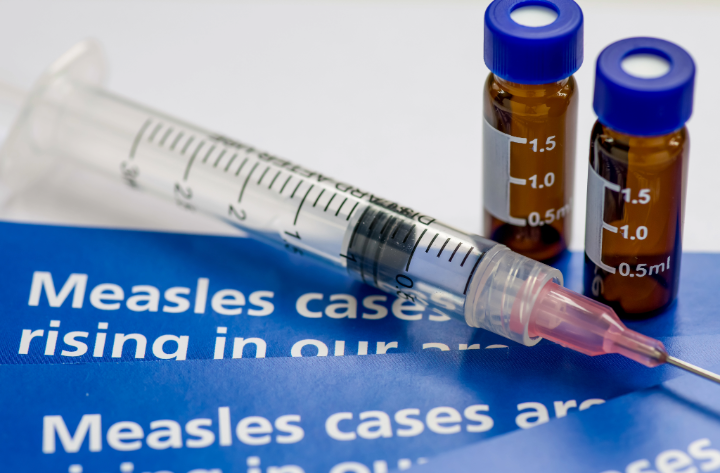

Vaccination has become an increasingly tumultuous and politicized conversation in recent years, but the rise in measles cases across the US has brought it into the spotlight.
While we are only halfway through the year, the CDC reports that the U.S is experiencing the largest measles outbreaks since 1991. While measles was declared eliminated in 2000, case numbers skyrocketed this year alongside the number of children who missed vaccination, which according to the World Health Organization (WHO), was 21 million.
One of the most dangerous aspects of measles is how contagious it is, as it is spread through the air. It is so contagious that about 9 out of 10 people who come near a person with measles and are not protected by vaccination will also become infected.
Understanding this is important, because one of the biggest ways we combat diseases such as measles is through immunization. According to the WHO, “Immunization currently prevents 3.5 million to 5 million deaths every year.” This number includes measles, which is prevented through the measles, mumps, and rubella (MMR) vaccine.
The Challenge: Misinformation
The current administration has intensified public debate over vaccination, particularly through actions led by Robert F. Kennedy Jr., the Secretary of Health and Human Services. Vaccine researchers, public health officials and medical professionals now face a more difficult environment as they work to respond to misinformation, policy shifts and contradictory public statements. RFK Jr.’s comments on the MMR vaccine have been especially confusing: while at times he acknowledges the vaccine’s effectiveness, he also made claims that undermine confidence, including saying in an interview with Sean Hannity that the vaccine causes deaths “every year.”
When such conflicting messages come from the nation’s top health official, they weaken trust in expert guidance and leave families searching for clear, reliable answers.
The Response
This is where organizations such as the American Academy of Pediatrics play an important role. Its Immunization Initiative has become a leading source of vaccine outreach and education. It was recently recognized by the Public Relations Society of America with the Silver Anvil Award, the “highest honor for public relations programming.”
The efficacy of the outreach program can be summarized in one word: trust.
As put by them, “The AAP is leading efforts to counter vaccine misinformation, increase vaccine confidence, and emphasize the overall safety and efficacy of vaccinations.”
For the AAP, protecting children’s health is rooted in showing up, listening and earning trust. One conversation at a time.
In a climate shaped by conflicting claims and complicated information, it can be difficult for families to know which sources to trust or how to make informed decisions about immunization. That is why organizations like the AAP matter. Their guidance comes from experienced medical professionals who work to answer concerns, build vaccine confidence, and support families with clear, reliable information.
________________________________________
This blog post was written by Laya Raju, a student at Boston University who is passionate about information accessibility, community advocacy, and health equity within the field of public health.