
Becoming a parent comes with many firsts, and for some mothers, that includes breastfeeding.
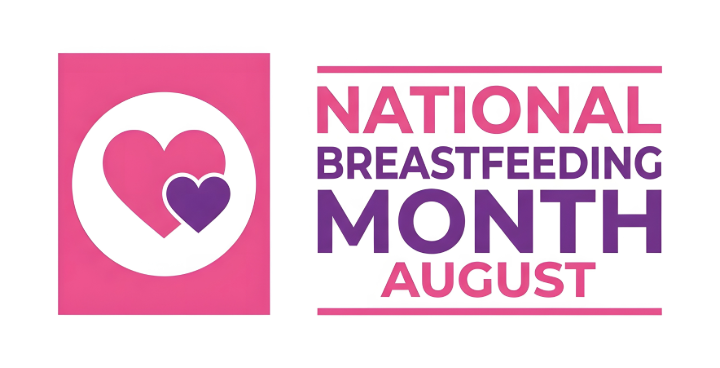
August is National Breastfeeding month, and as put by the U.S. Breastfeeding Committee, it is a time for “conversation about the policy and practice changes needed to build a landscape of support for babies and families.”
Conversation surrounding breastfeeding has become more nuanced as we consider better ways to support breastfeeding mothers.
As put by Karen Bodnar, a doctor and the medical director of Breastfeeding and Lactation Medicine at Inova Health System in Virginia, “many public health initiatives around breastfeeding focus on the patient’s intention to breastfeed and less on addressing the barriers to doing so.”
With that in mind, I want to use this month’s piece to look at infrastructure, policy changes, and education shaping mothers’ ability to breastfeed and the changes being made to improve them.
Barriers to Breastfeeding
Historically, Black, Indigenous, People of Color (BIPOC) mothers, especially Black and Hispanic mothers, are far more likely to struggle with breastfeeding because of racial and ethnic barriers.
According to this study published by the NIH, the authors found that BIPOC mothers, despite having the intention to breastfeed, were not receiving the counseling and advice white mothers were. This lack of education, guidance, and support not only can be isolating, but it can also discourage them from breastfeeding altogether.
Similarly, another NIH study found that “societal expectations and workplace policies significantly affect breastfeeding practices.” When individual challenges are compounded by an environment that does not facilitate mothers’ ability to breastfeed, they are increasingly dissuaded from choosing breastfeeding. Mothers deserve substantive choices, not to be pushed toward one option because the others are unsupported or unworkable.
Breastfeeding Medicine as a Certified Subspecialty
A recent piece by the AAMC highlights advancements being made in the medical profession to further support mothers with breastfeeding: it is now a board-certified subspecialty. Among those they interviewed, Casey Rosen-Carole, an MD, MPH who did her residency in pediatrics, commented on her own struggle with breastfeeding. She described how devastating it was to have to supplement her baby’s diet with formula and felt that she must be doing something wrong.
Furthermore, she was deeply shocked at how lost she felt, even as a medical professional who specialized in children. While her experience was at times disheartening, it pushed her towards breastfeeding medicine, and she is now amongst the growing number of doctors specializing in this field.
This marks a change in perspective that shifts away from individual behavior, and towards the systems and conditions mothers are navigating, and understanding what we can do to fix them.
As Rosen-Carole puts it, “I would love to get people out of the mindset that this is ‘just a mom-baby thing,’ which people may or may not do in their home. It is a complex biological process with a huge social component that requires support at every level.”
Advancements in Infrastructure and Public Policy
This month, local health departments are taking the initiative to highlight resources to support mothers who are breastfeeding and talk about what improving their support systems looks like.
The Texas Health and Human Services Commission celebrated National Breastfeeding Month by promoting the Special Supplemental Nutrition Program for Women, Infants and Children (WIC). This resource provides mothers with nutrition programs, guidance on breastfeeding, a lactation support hotline, trained clinical staff, peer counselors, and even fresh groceries, meant to alleviate some of the burdens and barriers mothers experience while trying to breastfeed.
Elsewhere, the New York State Department of Health has taken this month to recognize what steps can be made to remedy existing health disparities. As put by Xiomara Castro, the Site Director of Westchester Community Health Center, “Addressing the disparities that Black women experience in our community means creating an environment where mothers can ask questions, share their experiences, and receive the resources they need without judgment.” Together, these state-level efforts show how public health infrastructure can help replace the stigma with tangible support.
Breastfeeding is often treated as a purely personal matter, separate from the systems, policies, and support structures surrounding new mothers. But doctors, public health officials, and community advocates are challenging this narrative, and creating real, tangible progress. This National Breastfeeding Month is a reminder to keep pushing for the infrastructure and support all mothers deserve.
________________________________________
This blog post was written by Laya Raju, a student at Boston University who is passionate about information accessibility, community advocacy, and health equity within the field of public health.