John Allegrante
Legacy – Diamond
What or who inspired you to become a health educator?
I was inspired to go into the field of health education by several college faculty with whom I was fortunate to have studied during my early college years. They included Sally Klein, Charles Poskanzer and Donald Puretz, all of whom taught in the area of health sciences education at State University of New York (SUNY) colleges I attended. Each of them inspired me with their commitment to education as a means to improve the potential of young people.
What is one of your most memorable career highlights?
I am fortunate to have experienced many memorable career highlights. But three stand out as being especially memorable. The first was co-chairing the Galway Consensus Conference with Professor Margaret Barry of the National University of Ireland Galway in 2008. The subsequent special issues of Health Education & Behavior (SOPHE) and Global Health Promotion (IUHPE), which published in tandem the papers of the conference, comprised seminal contributions to advancing international collaboration on the development of the domains of core competency for health promotion and health education. The second was being nominated by faculty at my college alma mater, SUNY Cortland, and recognized in 2015 for my career contributions by the State University of New York with an honorary doctorate in humane letters (LHD). And the third was being honored in 2017 with the Elizabeth Fries Health Education Award from the Fries Foundation and CDC Foundation for my contributions to the fields of behavioral science and health education as a researcher, academician, and ambassador.
Who were/are mentors or significant champions for your career?
I have been fortunate to have had many wonderful mentors throughout my career—people who shaped my thinking and supported me and my work. They include Charles Poskanzer at SUNY Cortland; William Creswell, Jr., Martin Fishbein, Rudolf Mortimer, Thomas O’Rourke, Jeffrey Salloway, Donald Stone, and Seymour Sudman at the University of Illinois at Urbana-Champaign, where I did my graduate work; and later, Lawrence Green, when he was at the Johns Hopkins University, Clarence Pearson at the National Center for Health Education, and Elaine Auld, who was both mentor and collaborating partner during the years of my SOPHE presidency and beyond. When I arrived at Columbia, James Malfetti was instrumental in mentoring me during my early years on the faculty, and Mary Charlson, MD, at Weill Cornell Medicine, with whom I collaborated for more than a decade, and Lowell Levin at Yale, were equally influential as champions of my career.
How were you involved in SOPHE or other health education organizations?
I first became a member of SOPHE as a graduate student in 1975 and became steadily involved in the work of the organization during the 1980s. It was not until the 1990s, however, that I began taking on leadership roles in the organization, most notably becoming President in 1997-98, co-chairing with Collins Airhihenbuwa the National Task Force on Accreditation in Health Education in 2000, and serving as Editor-in-Chief of Health Education & Behavior from 2011 to 2017. I also served on numerous other committees, task forces, and other special ambassadorial assignments that enabled me to contribute to advancing SOPHE’s strategic goals. In addition, in the early 2000s, I served as President of the National Center for Health Education, eventually facilitating the repatriation of the Center’s programs to SOPHE.
What motivated you to donate to SOPHE?
I became interested in SOPHE’s finances and its future in the mid-1990s when I became chair of the SOPHE Resource Development Committee. I realized that SOPHE would never have the kind of impact it was capable of having without a significant effort in resource development that went beyond membership revenues. Having transformed the committee’s membership to align with the goal of raising more externally generated funds, I launched the Campaign for the 21st Century as National SOPHE President. I began donating to SOPHE to set an example of the importance of fund-raising for all future presidents and others in SOPHE leadership roles. As President and in the years that followed my presidency, I raised over $100,00 to support student scholarships, strengthen professional preparation, and advance other elements of SOPHE’s mission and strategic plan, including an endowment that to this day enables SOPHE to maintain its preeminence among national professional organizations representing the interests of public health education.
What advice would you give new professionals just entering the health education field?
Leap at the opportunity to take on any leadership role, no matter how small or insignificant, to develop your communication, organization, and political skills.
Who would you like to dedicate this page to?
Charles N. Poskanzer. Dr. Poskanzer, professor and chair of the Health Department at SUNY Cortland during the 1970s, was not only a mentor; he was a life-long friend and career confidant who was always there to listen, until his passing in 2010. A Michigan (B.A., Ph.D.) and Yale (M.P.H.) graduate, he was a protégé of Wilbur Cohen, Secretary of Health, Education and Welfare during the Kennedy administration, and among the architects of the Medicare program that has provided health care insurance for hundreds of millions of elderly Americans since its enactment in 1965.
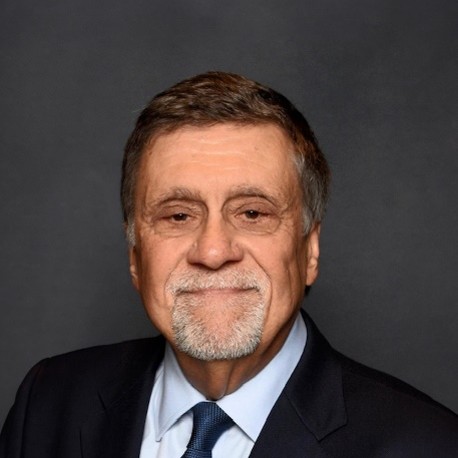
John is a diamond-level donor to SOPHE’s Legacy Circle Fund.
What’s your legacy?