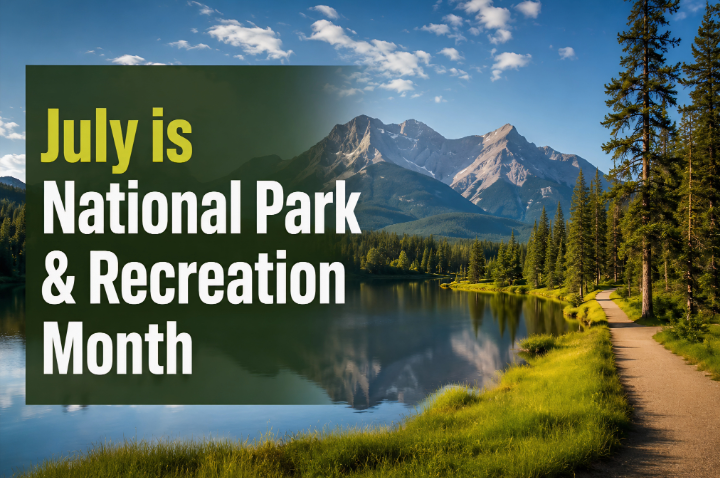

From Yellowstone to Acadia, July is a month to celebrate the National Parks that decorate our nation. The National Recreation and Parks Association has taken this month to recognize how “Parks and recreation brings us together, strengthens our health and well-being, and builds more resilient, connected communities.” As indicated by the NRPA, the role of National Parks in the United States are diverse and vital. As The National Parks Trust puts it, they protect irreplicable ecosystems, preserve cultural and historical heritage, increase access to nature, drive economic benefit, protect local water supplies and build a stewardship for nature. Despite the litany of benefits and beauty national parks provide to both our community and ecosystem, their infrastructure is still facing challenges today.
Money is currently being diverted from the National Parks Services by the Trump Administration towards Capitol Hill. According to the Independent, the Atlantic secured budgeting documents that show how over 900 projected park restoration projects lost funding that had been promised to them. Projects such as a $1.5 million roof replacement at Yellowstone, a $3 million free-bus system at Acadia National Park, and a $424,000 guardrail replacement at Black Canyon. These repairs exacerbate a long list of “deferred maintenance,” the $24 billion backlog of infrastructure repair and improvements detailed the Washington Post. This diversion of funds comes at the cost of the safety of visitors and the infrastructure of national parks across the nation.
But this is not the only challenge National Parks are facing. An Executive Order that went into effect in March said that “Museums in our Nation’s capital should be places where individuals go to learn—not to be subjected to ideological indoctrination or divisive narratives that distort our shared history.” This is not only a disparagement of the meaningful work many National Parks have done; it has negative repercussions for park rangers as well. According to NPR, this executive order “felt personal to former parks workers who spent their careers preserving artifacts that have now been deemed too radical for display.” While there has been pushback from the National Parks services and advocacy groups, rangers such as Elizabeth Kerwin at Harpers Ferry National Park, who spent years working on a new Black history exhibit, are fighting back. According to NPR, former rangers such as herself are taking it upon themselves to continue educating visitors and continuing their commitment to the important work they started.
As put by U.S District Judge Angel Kelly of Massachusetts, “History cannot be faithfully told while excluding the experiences of communities whose contributions, struggles, and achievements form an important part of our Nation’s story.” While National Parks continue to face this scrutiny, it is important to recognize those who are continuing to do the important work, even if their methods need to evolve alongside the challenge. Their perseverance reminds us that protecting national parks includes more than just the preservation of nature, it’s honoring the history and stories they represent as well.
________________________________________
This blog post was written by Laya Raju, a student at Boston University who is passionate about information accessibility, community advocacy, and health equity within the field of public health.