
Plenary Speakers
Wednesday, April 22
Plenary I:
Keynote Address & SOPHE 2026 Honorary Fellow Presentation
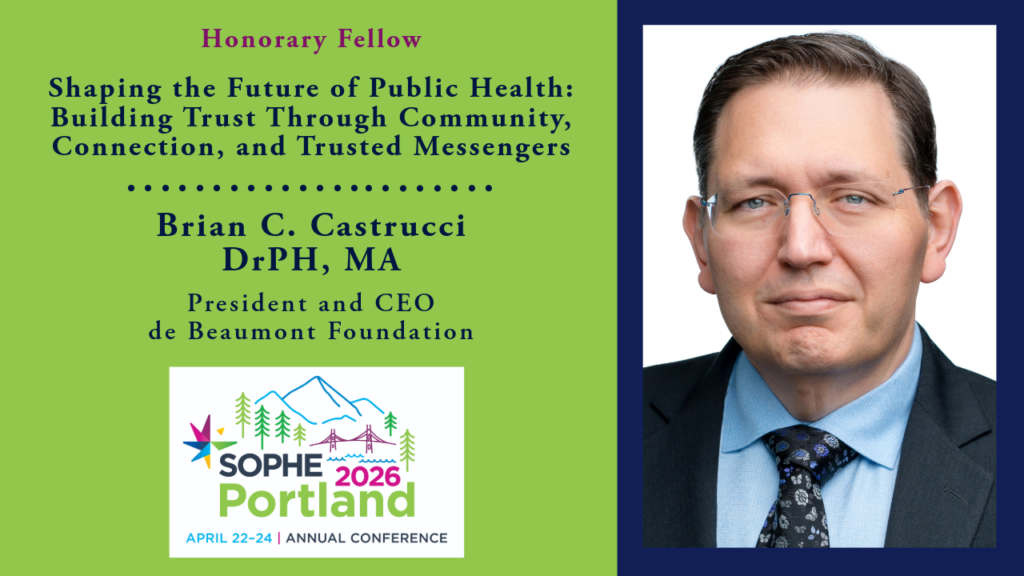
Brian C. Castrucci, DrPH, MA, is the president and chief executive officer of the de Beaumont Foundation. He has built the Foundation into a leading voice in health philanthropy and public health practice.
An award-winning epidemiologist with 10 years of experience working in the health departments of Philadelphia, Texas, and Georgia, Brian brings a unique perspective to the philanthropic sector that allows him to shape and implement visionary and practical initiatives and partnerships and bring together research and practice to improve public health.
Shaping the Future of Public Health: Building Trust Through Community, Connection, and Trusted Messengers
Plenary II:
Integrating Community Partnerships into Policymaking
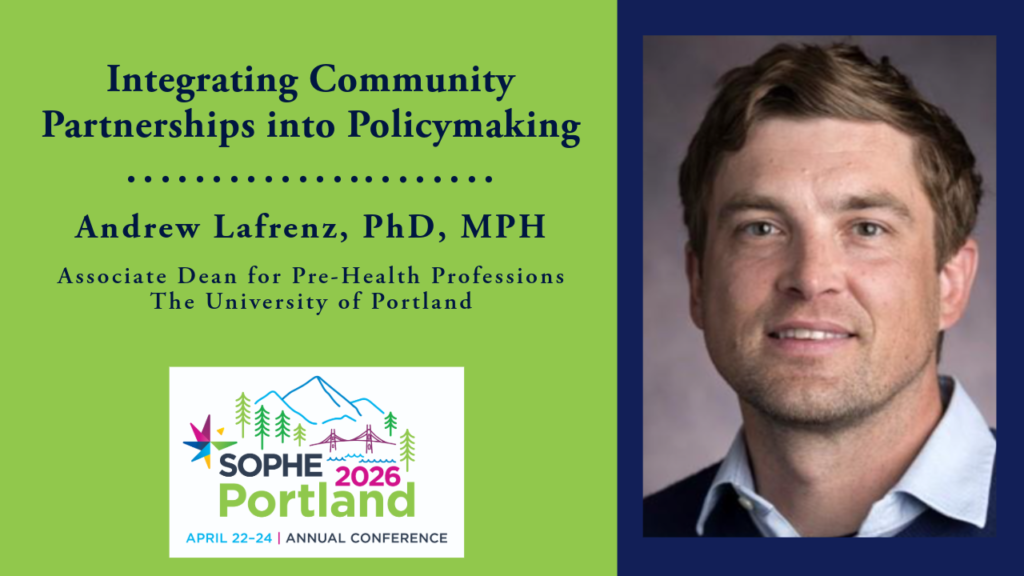
Andrew Lafrenz, PhD, MPH, is the Associate Dean for Pre-Health Professions, the Director of the Public Health and Wellness Program and an Associate Professor at the University of Portland. Andrew has graduate degrees in Kinesiology and Behavioral Epidemiology from the University of Georgia and Oregon State University. He completed a postdoc fellowship in epidemiology with the CDC in Wyoming.
His scholarship focuses on community-based research in the areas of maternal and child health as well as more recently, the role of green spaces on the health of communities. For the past 5 years, he has served as the County Epidemiologist for the Columbia County Public Health Department and as an elected official serving as a City Councilor for the City of Scappoose in Oregon.
Integrating Community Partnerships into Policymaking: An Innovative Model for Creating Multifunctional and Equitable Green Spaces
Thursday, April 23
Plenary III
Elizabeth Fries Health Education Award Presentation & Plenary
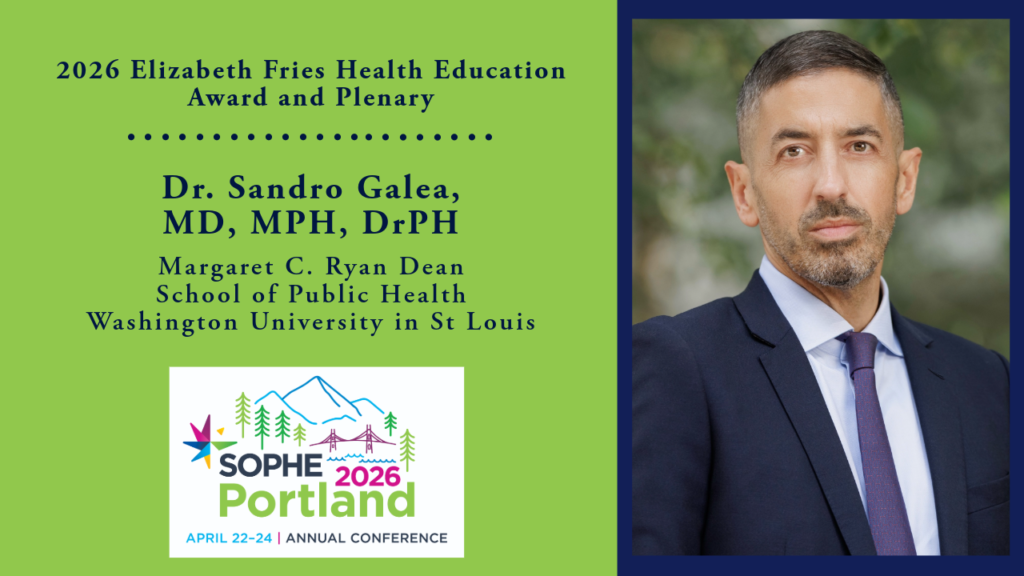
Sandro Galea, a physician, epidemiologist, and author, is the Margaret C Ryan Dean of the School of Public Health, the Eugene S and Constance Kahn Distinguished Professor in Public Health, and Vice Provost of Interdisciplinary Initiatives at Washington University in St. Louis. He previously held academic and leadership positions at Boston University, Columbia University, the University of Michigan, and the New York Academy of Medicine. He has published extensively in the peer-reviewed literature and is a regular contributor to a range of public media, about the social causes of health, mental health, and the consequences of trauma. He has been listed as one of the most widely cited scholars in the social sciences. He is past chair of the Boston Board of Health, of the board of the Association of Schools and Programs of Public Health, and past president of the Society for Epidemiologic Research and of the Interdisciplinary Association for Population Health Science. He is an elected member of the National Academy of Medicine. Galea has received several lifetime achievement awards. Galea holds a medical degree from the University of Toronto, graduate degrees from Harvard University and Columbia University, and honorary doctorates from the University of Glasgow and the Icahn School of Medicine at Mount Sinai.
Why do we aspire to create health? We do not do so for health in and of itself. Rather, we do so in order to ensure that people can live longer, more fulfilling lives. In other words, health is a means, not an end. Understanding health in this way changes how we think about health. Health becomes not the outcome of interest, but rather a process measure towards a higher order aspiration. How do we reckon with this from within the field of health? What are the priorities we should be thinking about when we think about health?
Plenary IV
TBD
Friday, April 24
Closing Plenary
TBD
Sponsors
Gold

Bronze


Opening Plenary Sponsor

Exhibitor
