
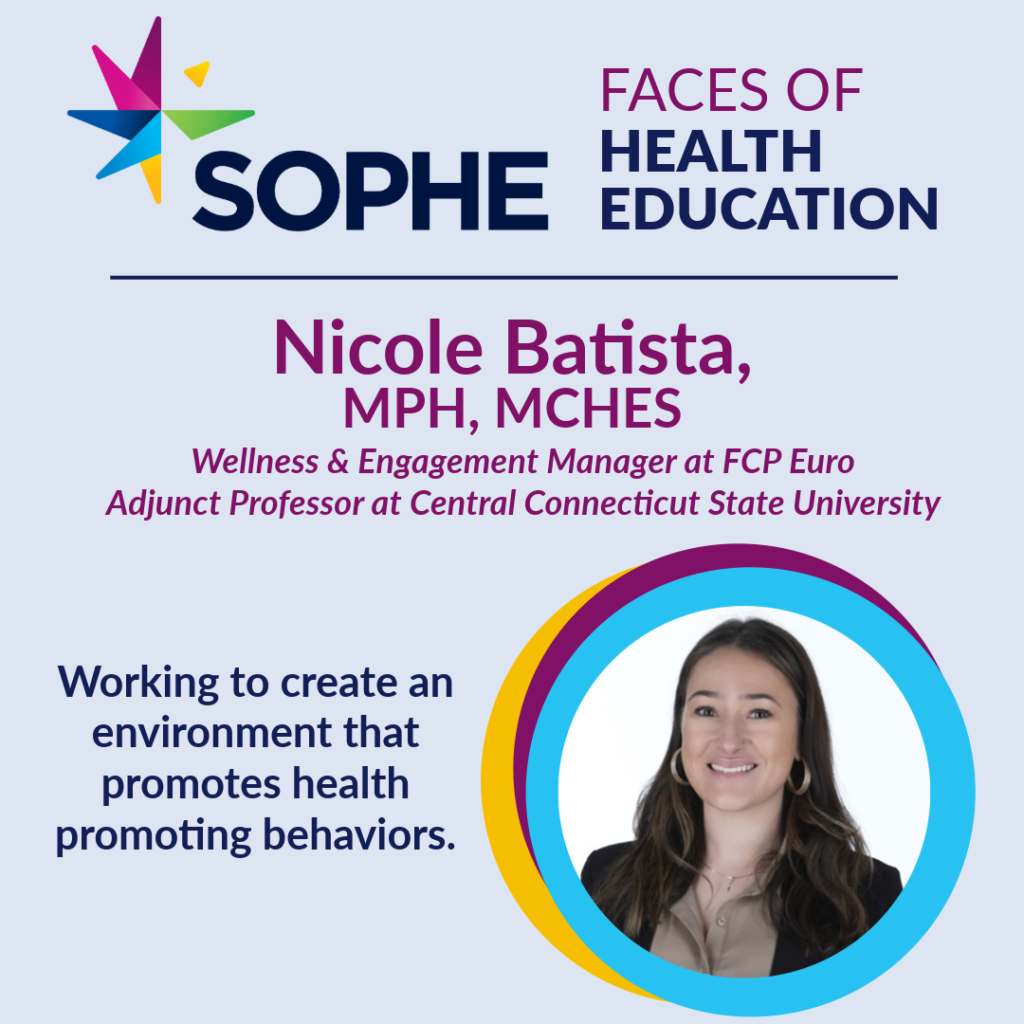
SOPHE member Nicole Batista is on the front lines of public health. Batista is the wellness manager for a 300+ employee company where her job is to create an environment “that promotes health promoting behaviors.”
But Batista is the only wellness manager at the company, nowhere near enough support for 300 people on her own. So, Batista’s mission is to help business managers build wellness into their leadership skills, integrating health into the work culture.
Clocking into work the first thing on most managers’ minds is probably not wellness. In fact, Batista explains how the key to her success lies in how she packages the message of the importance of mental health in alignment with business goals.
One approach is WIFM, or “what’s in it for me,” an approach centered on teaching managers how a focus on mental health in the workplace can benefit their careers due to “more engaged employees, higher retention, and higher revenue.”
As Batista explains, “employees who are well, can come to work and perform well.”
One program, Mental Health First Aid, which Batista has implemented, trains managers to be able to “identify signs and symptoms of a mental health challenge, respond to them, understand what’s going on, and then also connect them to company resources.”
When introducing this program to managers, Batista knows that she needs to explain and package it differently than other professionals may.
“It is less explaining how taking care of your mental health is important for your relationships, for reducing substance use, and for reducing the need for health care,” Batista, who is also an adjunct professor at Central Connecticut State University, said. “Instead, this is management skill. These are leadership skills. One in five people in the US will have a mental health challenge. So, odds are someone on your team is going to have a mental health challenge.”
By harnessing the power of messaging, packaging the information in a relatable way to her audience, Batista was able to have 100% of managers trained in mental health first aid, with over 50% of employees engaged in their wellness programming.
“Frame the message to the value of that population and engagement will come,” she said.
________________________________________
This blog post was written by Josie Miller, a student at Tufts University passionate about community health, storytelling, and honoring diverse lived experiences. This piece explores how real stories don’t just inform, they create connections, expand perspectives, and help build stronger, more compassionate communities.