
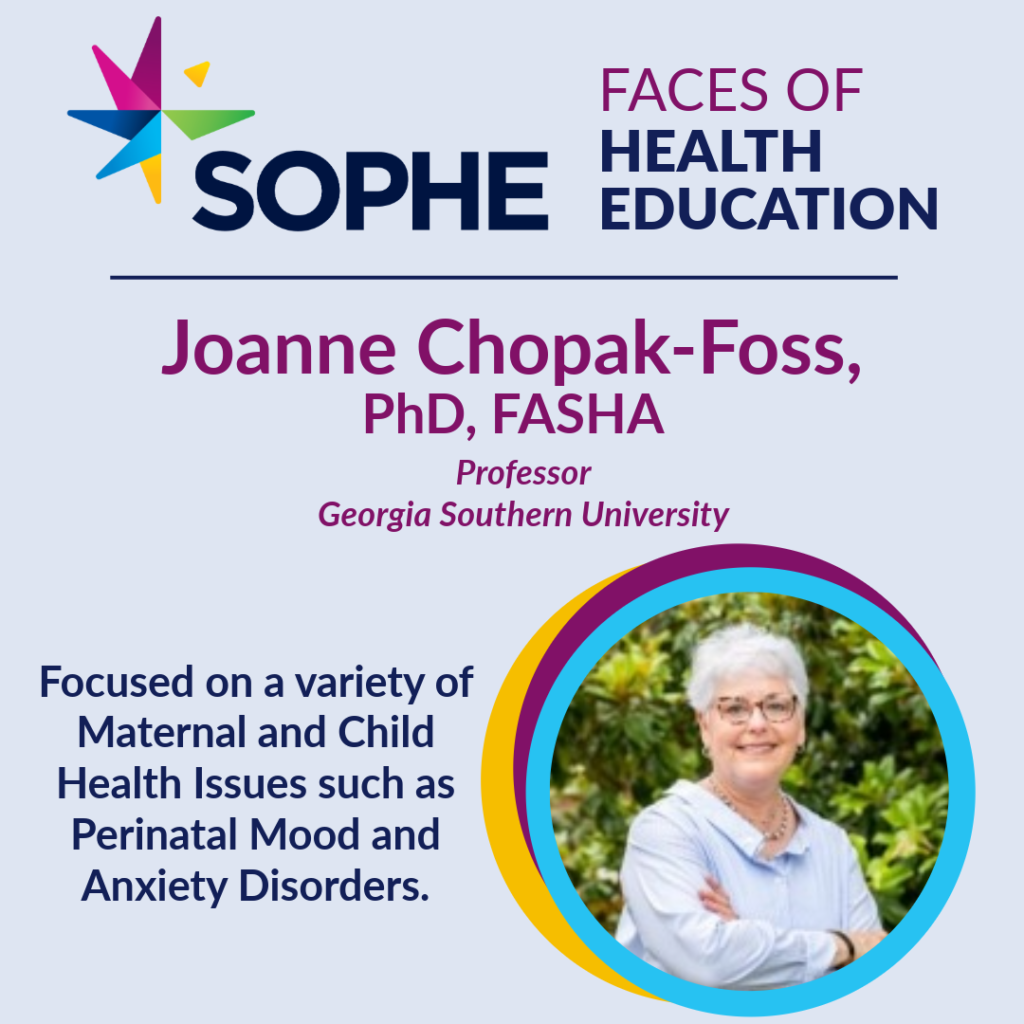
Joanne Chopak-Foss is a woman who can be called many different things: health educator, researcher, maternal mental health professional, professor, mother. As a health professional, she has excelled at her work. As a mother, she values the experience of raising her son. But what happens when these two worlds collide? The truth is women do not stop being mothers when they stop working, they do not stop being health educators and are not stripped of their Ph.D’s when they have children. Rather, their identities simply grow.
As a woman who considers herself a feminist, I’ve always enjoyed the modern rhetoric that women can do anything, be anything they set their minds to, including having a successful career and enjoying being a mother.
However, as Chopak-Foss described the story of having her son, I began to see things in a new light. She initially felt lucky she was able to stay home with her son. “I was able to, it was at the end of the semester, but then into part of the next semester, not having paid family leave began to take a toll. When I was home, I was worried about work. When I was at work, I wanted to be with my son.”
The feminist movement encourages women to have it all. From experience, Chopak-Foss, says that while that may be true for some women, it may not be true for all.
“You can have it all but maybe not all at one time,” she said. “There has been a rise of perinatal [the time surrounding being pregnant, giving birth, and post birth] mood and anxiety disorder (PMAD) when many women internalize.”
This has led to a rise in suicide among middle class educated white women. Observing this trend, Chopak-Foss has shifted her work to examine disparities in seeking care for PMADs. Chopak-Foss explains that a major reason for this rise is the lack of adequate post-natal mental health care for new mothers, with high rates of maternal mortality especially for women of color.
“We should be working together and supporting each other as women,” Chopak-Foss said. “And, we also need better systems in place to support all parenting choices, especially during the perinatal period – whether that be to stay home, keep working, or a mix of both.”
By listening to stories like Joanne’s, we can work toward a future where mothers get the support they need, helping their professional lives and motherhood be recognized. Not as competing identities, but as celebrated and valued ones.
________________________________________
This blog post was written by Josie Miller, a student at Tufts University passionate about community health, storytelling, and honoring diverse lived experiences. This piece explores how real stories don’t just inform, they create connections, expand perspectives, and help build stronger, more compassionate communities.